NAM - English
The façade access industry continues to move forward as buildings grow taller and more architecturally ambitious. Throughout 2025, several major projects showed how facade access solutions support long term building care, safe maintenance work, and architectural performance. From implementing its first AMS in North America to supporting complex hospitality and commercial developments, the year reinforced the value of well-planned façade maintenance.
The North American landscape in 2025 demanded a versatile approach to building maintenance, ranging from the restoration of heritage-standard skyscrapers to the integration of access systems in sloped, modern hospitality structures. Facade Access Solutions NAM addressed these challenges by prioritizing engineering precision and safety. The following projects represent the pinnacle of maintenance efficiency, highlighting how customized engineering ensures that even the most complex architectural visions remain serviceable and safe for decades to come.
The Engineering Blueprint:
1900 Lawrence features a modern commercial design where maintenance readiness was integrated from the outset. Facade Access Solutions NAM designed, delivered and installed a telescopic pedestal CoxGomyl BMU capable of glass replacement and façade cleaning across multiple elevations. The system remains discreet when stowed yet provides long outreach and lifting capacity for heavy glazing. Pre-tested components allowed installation in just three days.
Spacious work floors, private terraces, and sustainability goals make this tower a premium workplace in Denver, supported by façade access systems designed for long-term maintenance efficiency.
Innovation Intel:
1201 Third Avenue required a façade access solution adaptable to curtain wall curves and varied elevations. Facade Access Solutions collaborated with Manntech engineers to install four BMUs at building corners, providing complete reach without structural interference. Encoder-based positioning ensures precise, safe movement, reducing collision risk. Rooftop assembly was completed via service elevators, avoiding crane use, and night work minimized tenant disruption.
Precision Profile:
Park Hyatt Chicago demanded a BMU replacement compatible with the existing track system and tight rooftop clearance. Facade Access Solutions NAM together with Manntech engineers designed a Type 4.1 BMU with a luffing mast and two-stage telescopic jib, enabling access to terraces and recessed façade areas. One turn automated launch and return replaced the former multi step manual process, improving safety, efficiency and energy use. By reusing the existing track system and upgrading to a modern AMS solution, the project reduced material waste and extended the building’s maintenance asset life.
The BMU was delivered by helicopter lift which prevented major construction impact on the building. The result supports long term, sustainable facade maintenance while preserving the clean visual profile expected in a luxury hotel environment.
Core Specifications:
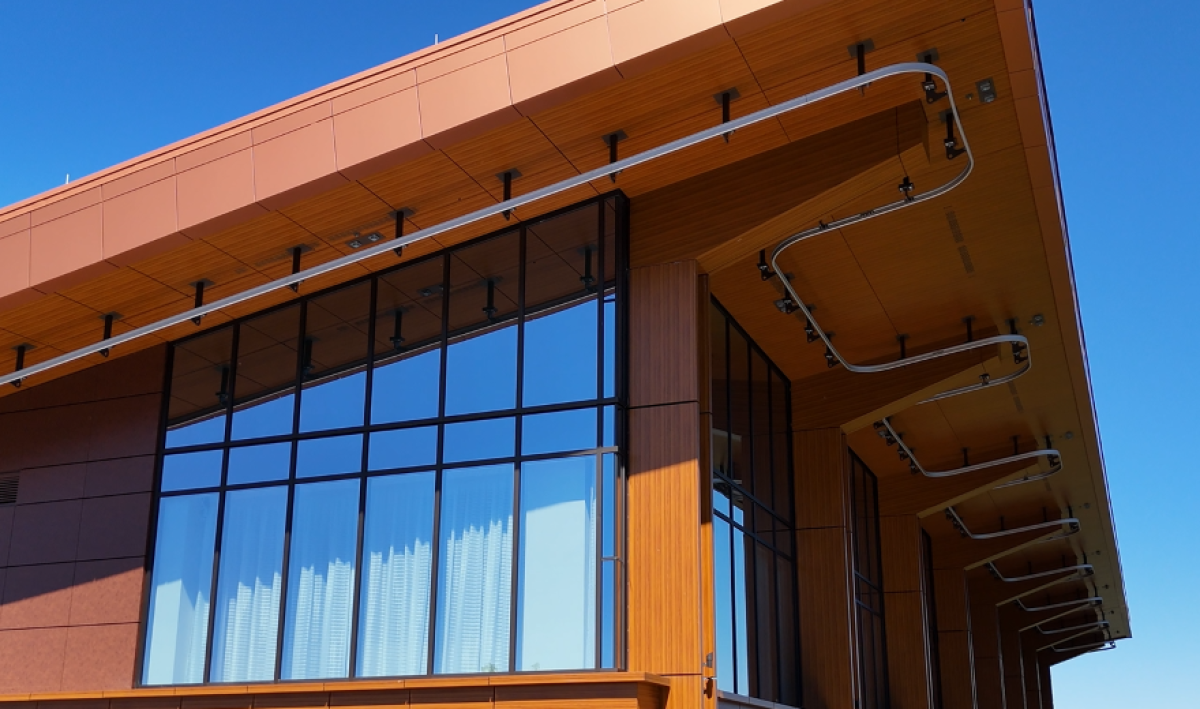
The Snoqualmie Casino expansion included a 210-room hotel, spa, indoor pool, restaurants, entertainment hall, and parking structure. The building’s 10° sloped roof presented challenges for standard BMUs. Facade Access Solutions NAM worked with Tractel engineers to implement a customized solution combining Railscaf, Travsmart, and tieback systems. Friction-driven trolleys and powered platforms ensured secure movement along the inclined façade, while continuous lifelines on the roof provided safe operator access. Laser leveling and modified Railscaf tracks ensured precise installation and architectural integration.
This innovative approach balanced safety, efficiency, and design harmony, enabling long-term maintenance without compromising the building’s aesthetics.
Throughout 2025, Facade Access Solutions NAM together with Tractel, Manntech and CoxGomyl delivered innovative, safe, and reliable façade access systems across high-rise, commercial, and hospitality projects. From restoring BMUs at 1 Bloor to enabling maintenance-ready towers, luxury hotels, and complex resort developments, these collaborations highlighted the importance of maintenance planning, advanced engineering, and OEM expertise.
As buildings grow taller and more complex, safe and efficient access remains essential. With Facade Access Solutions leading the way alongside its trusted partners, the industry enters 2026 with smarter systems, stronger maintenance strategies, and long-term support for building care worldwide.