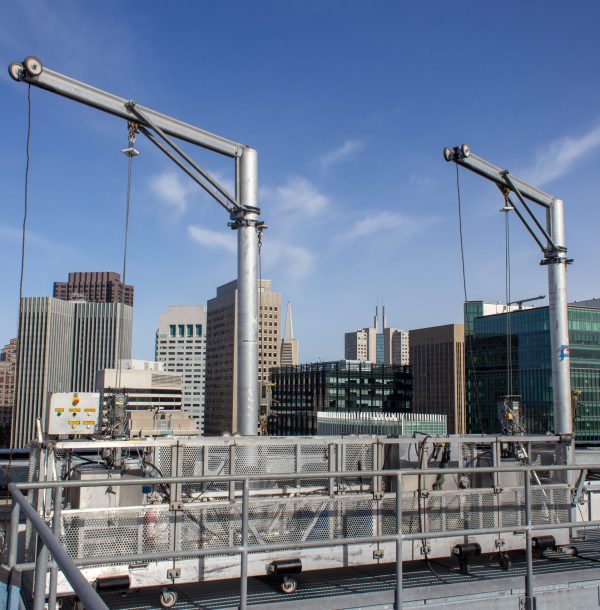
Tiebacks and lifelines are fundamental to ensuring safe facade access. These systems anchor outrigger rigs, lifelines for suspended platforms, and other building-maintenance equipment to the structure, all while safeguarding operatives from falls. Each anchor is precisely engineered and tested to withstand forces in timber, concrete, or steel, guaranteeing dependable performance on every project.
Facade Access Solutions EMEAI supplies tiebacks with a rated capacity of 5,000 lb in all directions, meeting rigorous international and EMEAI regional safety standards. Our lifeline systems provide continuous fall protection and support both horizontal and vertical movement during maintenance. Together, these components deliver a comprehensive safety solution for both new-build and retrofit applications.
Tieback anchors play a vital role in facade access systems. They secure outrigger systems, suspended platforms, and other fall protection equipment to structural wood, concrete, and steel. Designed for safety and tested for strength, these anchors offer dependable performance across all project types, from new builds to modernisations.
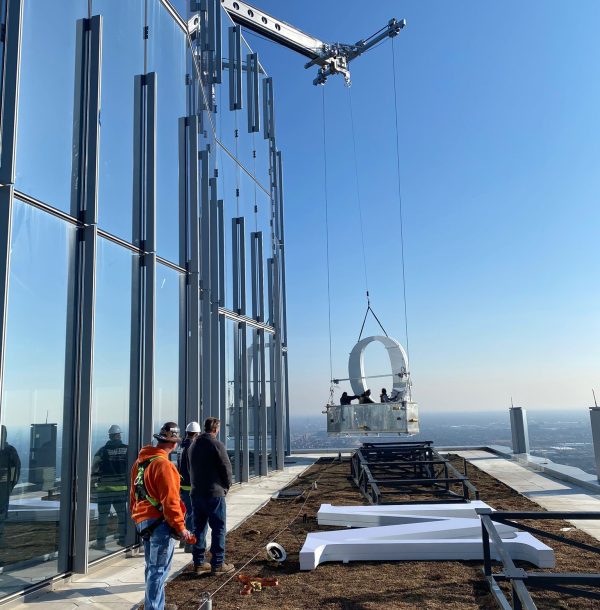
These anchors are fixed directly into structural timber, concrete or steel on the roof, offering secure connections for suspended platform rigging. Proof testing confirms their capacity and compliance with safety regulations, making them a highly cost-effective choice for facade maintenance systems. Our systems are designed to meet BS 8610 standards to ensure maximum safety for our projects in the UK.
Where rooftop installation is not feasible, wall-mounted anchors provide a secure, durable point of connection. They allow fall–protection systems and outriggers to attach directly to the building’s walls, delivering long-term load resistance and safety on site. These installations often incorporate a horizontal safety line to allow technicians to move securely across the building facade.
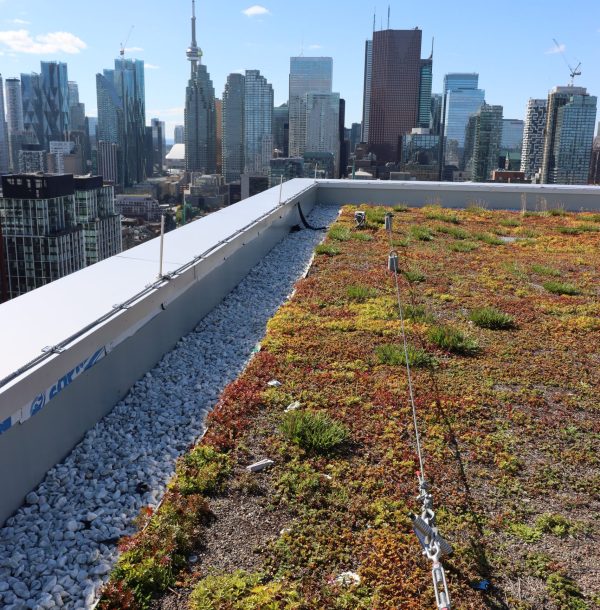
Flush-mounted anchors sit level with, or below, the roof surface, which makes them virtually invisible. This design is particularly suited to projects where maintaining architectural aesthetics is as important as safety. It ensures compliance and integrity for BMUs and access systems, without visible hardware. Our team can also provide BMU operator training to ensure that discreet systems are used correctly by site staff.
As part of the Alimak Group, Facade Access Solutions EMEAI brings decades of global engineering expertise to every tieback and lifeline system. Our affiliation with leading brands, like Tractel, Manntech, and CoxGomyl, provides the technical depth needed for projects of all scales.
Our European, Middle Eastern, Indian, and African team offer safety equipment that is designed, tested, and certified to meet the world’s highest safety and performance standards. From project design and specification to installation, we support clients with expert consultation and seamless implementation, while ensuring even the most complex jobs are both safe and efficient. This includes providing detailed facade access maintenance strategy to help buidling owners manage long-term asset care.
With Facade Access Solutions EMEAI, you benefit from tried-and-tested systems and international support through every stage of your facade access strategy.
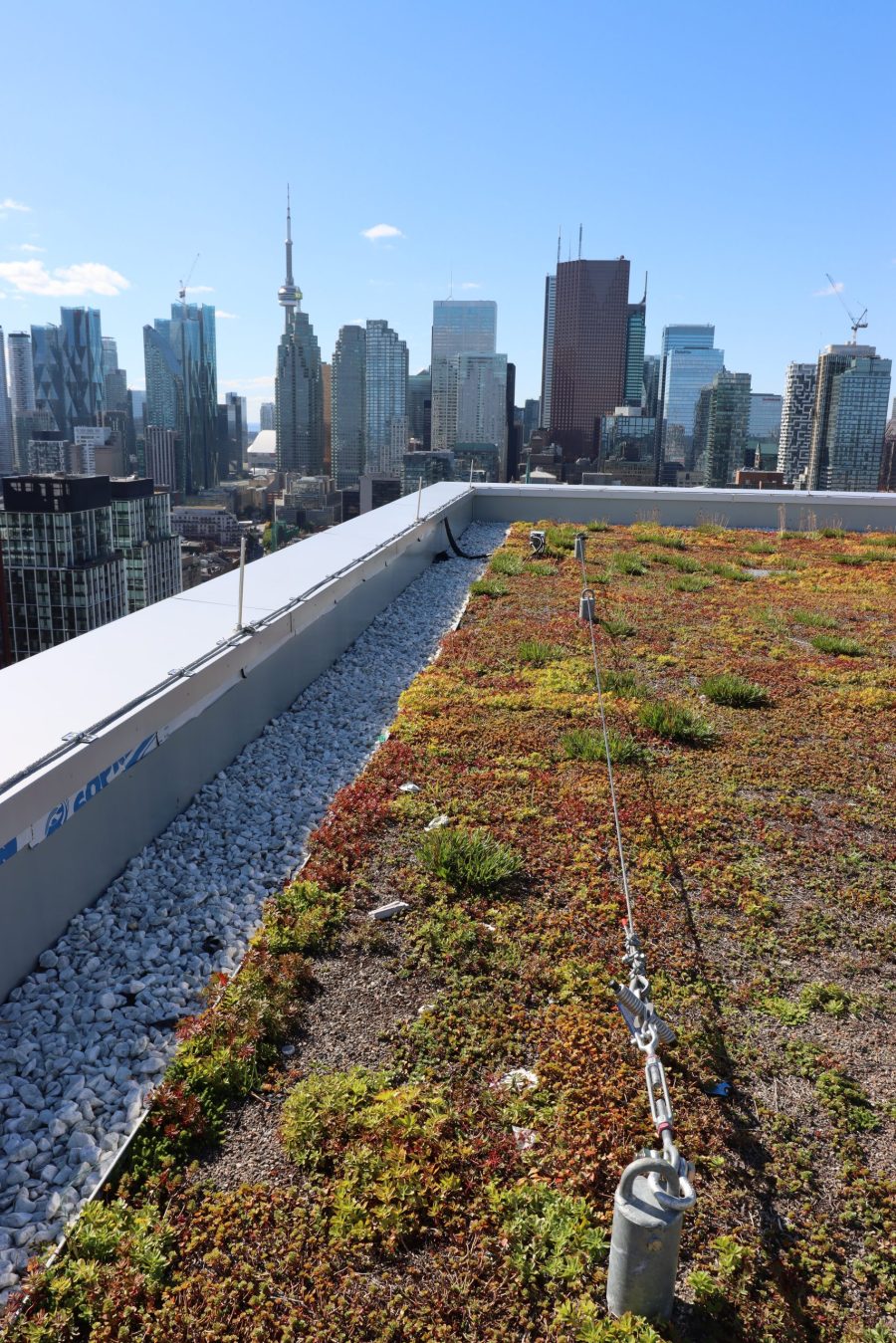
A tieback anchor offers a reliable attachment point for suspended platforms, BMUs, and other facade access systems. They are engineered to resist force in timber, concrete, or structural steel, while ensuring stability and worker protection during construction and maintenance.
Anchors undergo proof testing, applying controlled tension to verify load capacity. Testing measures installation torque, bond length, and structural resistance to ensure they can safely support suspended platforms and fall protection systems. In many regions, this invlovesinvolves a formal BMU statutory inspection to verify ongoing safety.
Yes, vertical lifelines, horizontal lifelines, and self-retracting systems can all be installed on existing buildings. These systems are commonly mounted on roofs or walls to create safe anchor points for workers and are designed to comply with international safety standards.
Tiebacks and lifelines should be inspected at least once a year, and after major events such as structural changes, equipment replacement, or severe weather. Regular checks verify load capacity, resistance, and compliance to ensure long-term safety. We often recommend a BMU annual service contract to streamline this process for facility managers.
Definitely. They represent a long-term investment in safety and efficiency, helping to reduce liability while facilitating straightforward facade access. Constructed with robust rods, bolts and accessories, these systems resist tensile stress and movement, making them ideal for both new builds and retrofit applications.
Facade Access Solutions EMEAI provides detailed technical resources, including BIM files and specification sheets. These documents outline anchor capacities, embedment depths, rod dimensions, installation torque, and bond lengths, offering essential guidance for architects, engineers, and contractors during the planning and design process.
Our EMEAI regional team offers complete support from system design through to on-site installation. Experienced technicians manage installation torque, bond lengths, and proof testing to ensure every anchor meets international safety standards and delivers reliable, long-term performance.