Global Site - English
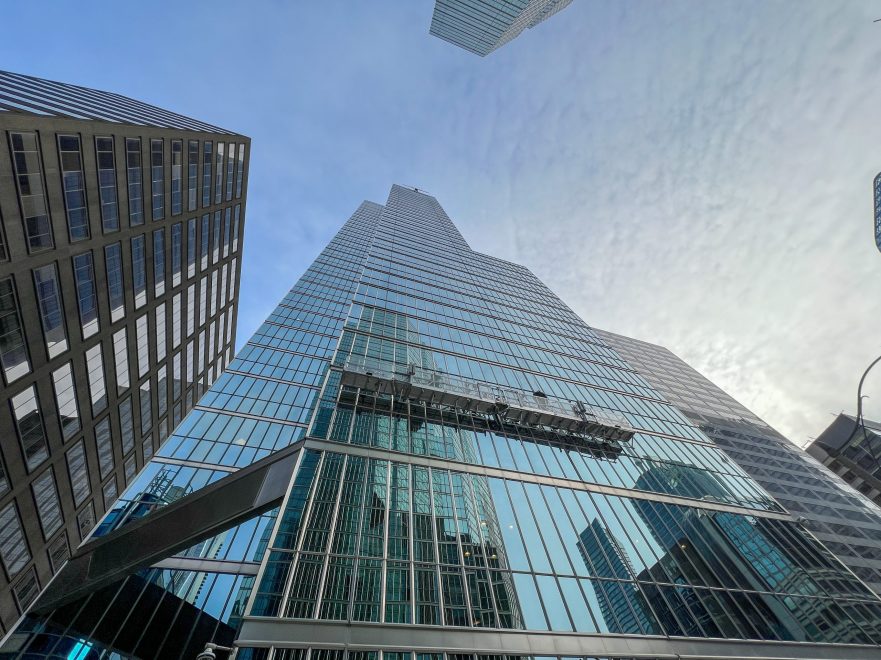
Facade Access Solutions brings the engineering depth needed to solve these challenges. As part of the Alimak Group, we draw on over 120 years of combined experience across our brands and over 16,000 installed facade access projects worldwide. Our team has designed and delivered permanent facade access systems for some of the largest airport terminals in operation today.
From initial design consultation through installation and long-term service, we provide a single-source partnership for airport facade access. Every system is engineered to work within restricted airside zones, coordinate with 24/7 terminal operations, and meet the safety codes of the jurisdiction where the building stands.
Airport terminals rarely rely on a single piece of facade access equipment. The combination of curved rooflines, cantilevered canopies, and multi-story glazing means most projects require several product types working together. Below are the core products we deploy for aviation and transport hub projects.
Airports with large-span roofs and curved facades require a building maintenance unit capable of traversing uneven rooftop surfaces and reaching every exterior section. Our BMU systems travel on customized track layouts that follow the contours of terminal rooflines.
When terminal designs leave limited roof space for a full BMU, monorail systems provide an efficient alternative. Mounted on brackets along the building perimeter, these aluminum track systems support traversing trolleys that suspend powered platforms. They are well-suited for low-to-mid-rise terminal sections, covered walkways, and concourse facades where compact, unobtrusive access is critical.
For sections of a terminal where permanent track-based systems are impractical, davit systems provide reliable point access. Portable davit arms mount into fixed bases at structural points along the roofline. They are commonly used on control towers, boarding gate canopies, and auxiliary structures where roof loading limits the use of heavier installations.
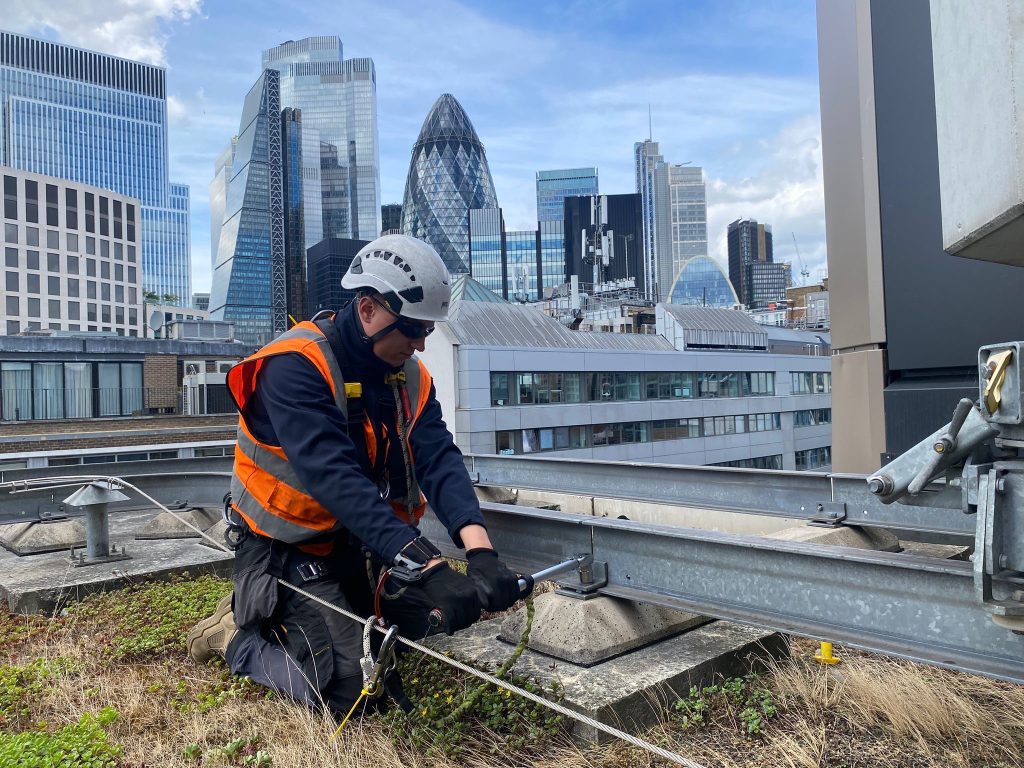
Every facade access installation at an airport must include fall protection. Our tiebacks and lifelines provide permanent anchor points and horizontal lifeline systems that comply with international standards. These components integrate with the building structure during construction or can be retrofitted to existing terminals during upgrade programs.
The best time to plan facade access is at the start of a project. Retrofitting a system after construction is always more expensive and more disruptive. Facade Access Solutions offers solutions that align with the project stage and the building’s structural realities.
Specifying facade access early in the design phase prevents costly structural changes later. For new airport terminals, our engineering team works alongside architects, engineers and consultants to integrate new construction solutions from day one. This includes roof load calculations, track routing, BMU parking positions, and cradle deployment strategies mapped to the terminal layout.
Complex terminal geometries require close collaboration between the design engineers and the project team. Our integrated design services include 3D BIM modelling, finite element analysis of structural loads, and cleaning cycle simulations. We coordinate with facade consultants and contractors to ensure the access system aligns with the architecture without compromising aesthetics or functionality.
Aging terminals often operate with outdated or undersized access equipment that no longer meets safety codes. Our retrofit services replace end-of-life systems with modern, code-compliant facade access equipment. We design retrofit solutions that work within the structural limits of the existing roof, minimizing disruption to terminal operations during installation.
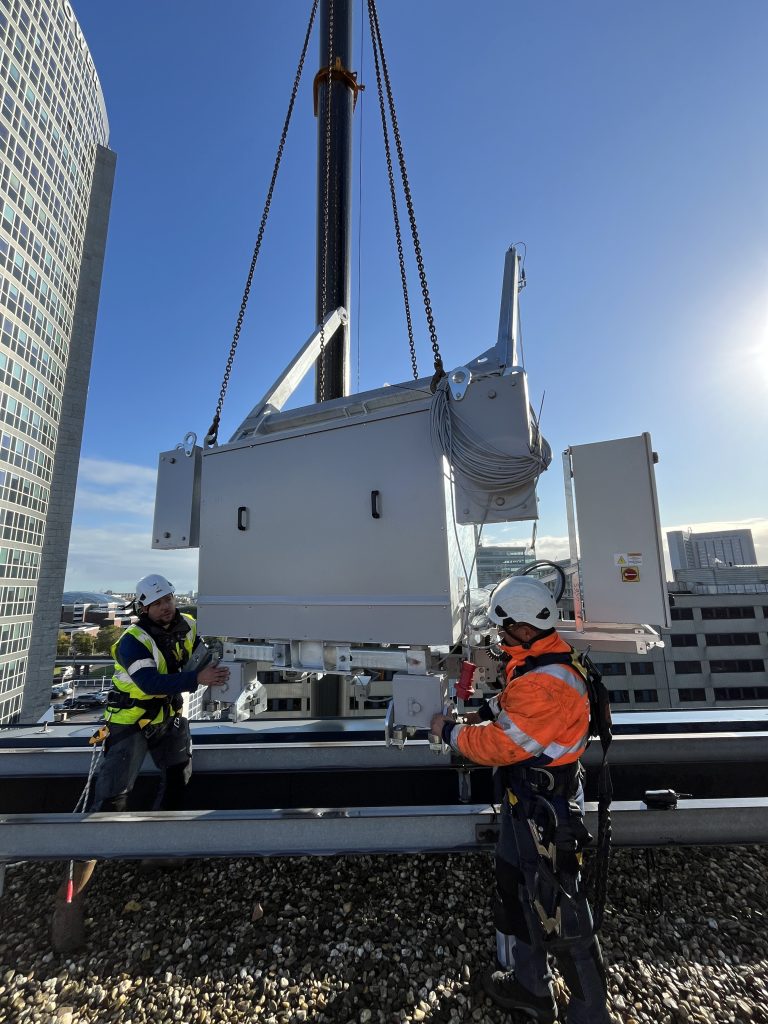
Facade Access Solutions provides a full lifecycle service program through a worldwide network of factory-trained technicians. Each service offering is structured around the airport’s specific equipment and operational schedule.
Unplanned equipment failure at a busy terminal is not an option. Our service solutions range from scheduled maintenance plans to emergency callout support. Each service agreement is tailored to the airport’s specific equipment type and operational schedule to minimize facade-cleaning downtime.
Regular inspections keep equipment safe and compliant with local and international regulations. Our inspection programs follow structured protocols covering hoists, ropes, tracks, anchors, and safety devices. Inspection reports document the condition of every component and flag items requiring attention before they become a risk.
Replacing an entire facade access system is not always necessary. Our refurbishment solutions restore aging BMUs and access equipment to current performance and safety standards. This extends the operational life of existing systems at a fraction of the cost of full replacement, keeping the airport running while the work is completed.
Using genuine parts protects system performance and preserves warranty coverage. Our OEM spare parts inventory includes hoists, motors, cables, control systems, and safety components manufactured to original specifications. Fast global distribution means reduced lead times for airports that cannot afford extended equipment downtime.
Managing multiple facade access systems across a large airport campus requires structured oversight. Our asset management programs provide lifecycle planning, condition monitoring, and budget forecasting for every piece of access equipment on site. Remote monitoring through our MyBMU platform gives facility teams real-time visibility into system status and usage.
Airport maintenance crews must be trained to operate facade access equipment safely. Our training programs cover equipment operation, emergency procedures, and routine pre-use checks. Training is delivered on-site by qualified technicians and can be scheduled around airport operational windows to avoid service disruption.
Our portfolio includes facade access installations at some of the most demanding airport and transport hub projects built in the last two decades.
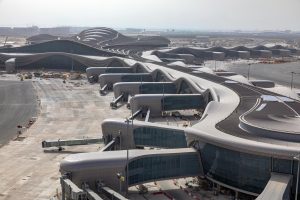
System Type: CoxGomyl configurable BMUs, monorail systems, gantries, aerial work platforms, abseil rails
Standing at only 52 meters in height but spanning 700,000 m² in total area, Abu Dhabi Airport required a large-scale facade access system across its uniquely shaped terminal. CoxGomyl delivered a comprehensive solution including a series of BMUs alongside monorail systems, gantries, aerial work platforms, and abseil rails to achieve full coverage across 115,000 m² of glazing and 275,000 m² of aluminum cladding.
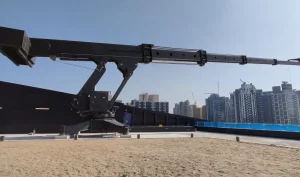
System Type: 3x Type 6 BMUs (two 4-stage telescopic jib, one parallelogram), stationary crane BMU
Airside is a mixed-use transport-oriented development connected to the Kai Tak MTR station in Hong Kong. Manntech provided three Type 6 building maintenance units with outreach up to 38 meters. The system includes two 4-stage telescopic jib BMUs and one parallelogram BMU. The largest unit weighs 93 tonnes and features a 1,000 kg glass replacement loading capacity, making it the biggest BMU installation in Hong Kong.
Facade access systems installed at airports must comply with the applicable codes in each jurisdiction. Key standards include:
Talk to our facade access engineers about your terminal project.
Most airport terminals require a combination of systems. Large terminals typically use track-mounted building maintenance units for primary facade coverage and monorail systems for lower sections and canopies. The right mix depends on the terminal geometry, roof structure, and cleaning cycle requirements. A facade access consultant can evaluate your building and recommend the optimal configuration.
Facade access systems at airports must comply with the building maintenance regulations of the country where the terminal is located. In Europe, BS EN 1808 and BS 6037 are the primary standards. In the United States, OSHA 29 CFR 1910.66 applies. In Australia, AS/NZS 1891 governs fall protection. Airport-specific requirements from ICAO and IATA may also apply. Visit our codes & regulations page for details.
Yes. Many airports operate with aging or undersized facade access equipment that no longer meets current safety codes. Our retrofit services replace end-of-life systems within the structural limits of the existing roof. We plan installations around terminal operating schedules to minimize disruption to passengers and airline operations.
Facade Access Solutions is part of the Alimak Group. Together, these brands have delivered over 16,000 facade access installations worldwide. Our global engineering teams, factory-trained service technicians, and full lifecycle support make us a single-source partner for facade access design, installation, and ongoing maintenance.
Facade cleaning at airports is typically scheduled during off-peak hours or overnight to avoid conflicts with passenger operations and airside activities. Our BMU systems feature automated positioning and remote monitoring through the MyBMU platform. This helps facility teams coordinate facade cleaning access cycles efficiently. Maintenance plans are structured around the airport’s operational calendar so that cleaning never interferes with terminal services.