Global Site - English
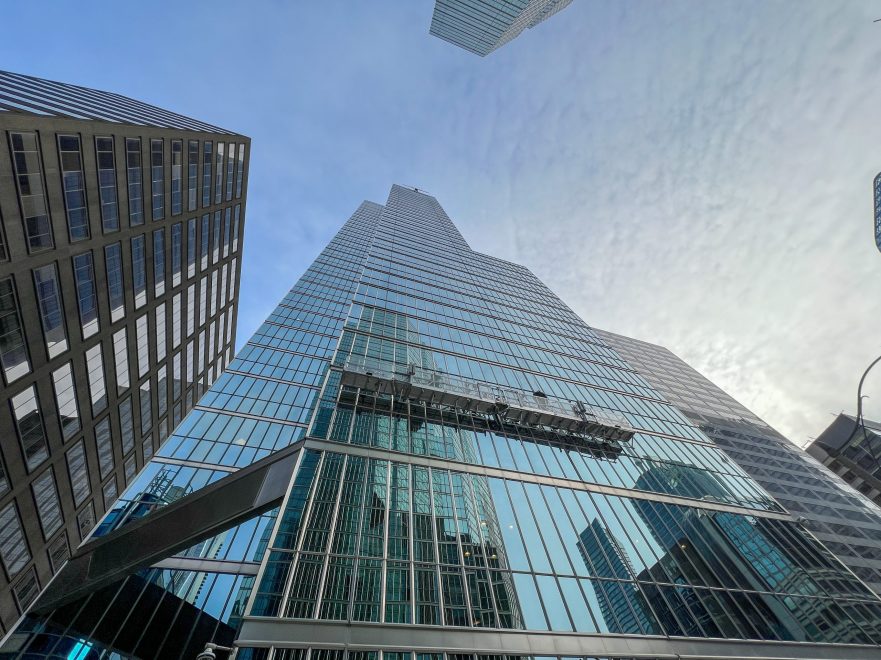
Healthcare buildings present a distinct set of structural challenges. Multi-wing layouts, interior atriums, glass curtain walls, and rooftops crowded with HVAC and exhaust systems all limit where facade access equipment can be positioned.
Our engineering team accounts for restricted zones near operating theaters, isolation wards, and emergency departments during the design phase, producing a facade access system that reaches every surface without compromising sensitive areas. Every system is designed for code compliance, long-term reliability, and safe operation at height.
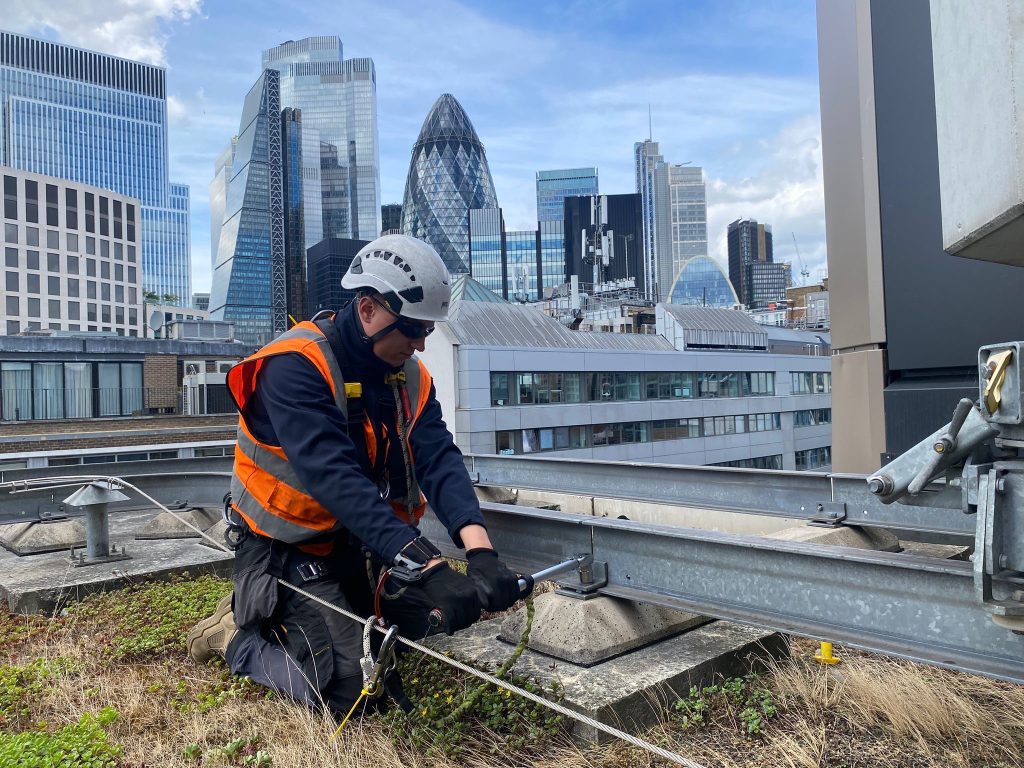
Every healthcare facility has different access requirements depending on building height, facade complexity, and roof conditions. Here is how each system addresses the specific demands of healthcare facilities.
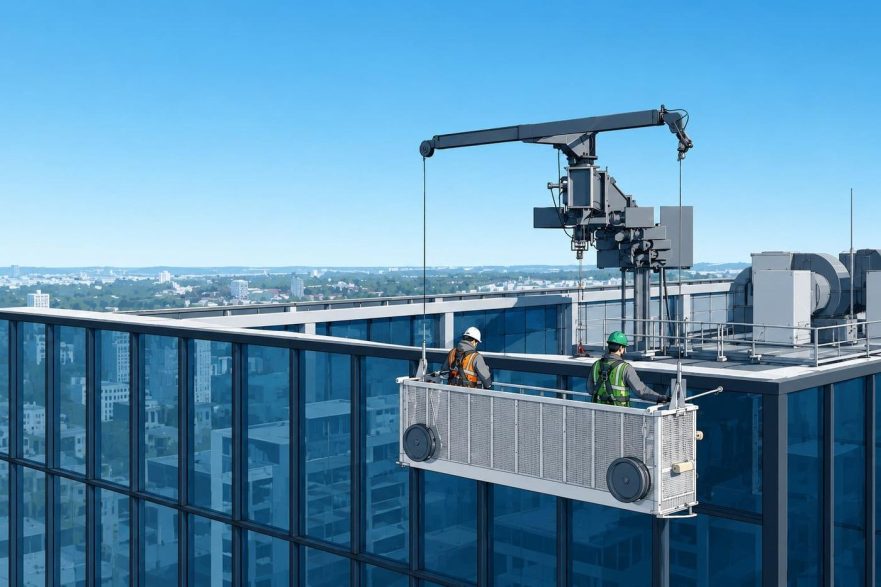
Multi-story hospitals often have rooftops loaded with mechanical equipment, leaving minimal space for conventional access systems. Our custom BMUs are engineered to navigate tight roof layouts and complex facade geometries. Each building maintenance unit is designed around your specific structural loads and operational constraints, so maintenance crews can reach every section of the facade without disrupting patient areas below. For healthcare facilities that require full-perimeter coverage, a facade access BMU is the most reliable long-term investment.
For low- to mid-rise clinics, outpatient centers, and campus buildings, the right system depends on facade complexity and long-term maintenance needs. A davit system is often sufficient, though a BMU can still be the better choice in some cases. Davit systems use portable mast-and-boom assemblies mounted on permanent bases to provide safe, repeatable facade access at a lower cost. Setup is fast, and the davit arms stow out of sight when not in use. This is a practical choice for healthcare facilities that need dependable access without the structural commitment of a rooftop BMU.
Hospital lobbies, atriums, and covered walkways with large glazed surfaces are difficult to reach from the exterior. Monorail systems provide a fixed track path along these interior or semi-enclosed areas, allowing maintenance platforms to access glass panels and cladding without scaffolding. That means no blocked corridors, no construction barriers in patient-facing spaces, and far less downtime per cleaning or inspection cycle.
Fall protection is non-negotiable on any occupied building, and healthcare facilities face extra scrutiny from regulators and accreditation bodies. Permanent tieback anchors and lifeline systems give maintenance personnel safe anchor points at roof level and along the facade. These systems are designed to meet OSHA, ANSI, and international fall protection standards, eliminating the need for temporary rigging on every service visit.
For healthcare buildings with relatively uniform facades, a powered platform delivers a modular facade cleaning access system that deploys quickly with minimal roof loading. Platforms can be configured to different lengths depending on the building footprint. They are a strong option when the building does not justify a permanent rooftop BMU but still requires regular exterior maintenance.
Facade Access Solutions supports healthcare projects from early design through decades of operation.
The most cost-effective time to integrate facade access is during the design phase. Specifying access systems early allows structural engineers to plan roof loads, anchor placements, and track routing before the building goes vertical. Our team collaborates with your design group from schematic design through construction documentation. That early involvement avoids the expensive structural retrofits that come from deferring access planning to the end of a project.
Complex healthcare campuses benefit from having a facade access consultant embedded in the design process. We provide BIM-compatible 3D models, structural load calculations, and system simulations so your architects and engineers can evaluate access strategies before committing to a design direction. This level of coordination reduces change orders, avoids clashes with mechanical systems, and produces a more efficient facade access solution overall.
Many hospitals were built before modern facade access standards existed. Some rely on temporary scaffolding or swing stages with no permanent anchor points. Bringing these older buildings up to current code requires permanent systems engineered to fit existing structural conditions. We plan every retrofit around active hospital operations to reduce disruption while keeping the project moving safely.
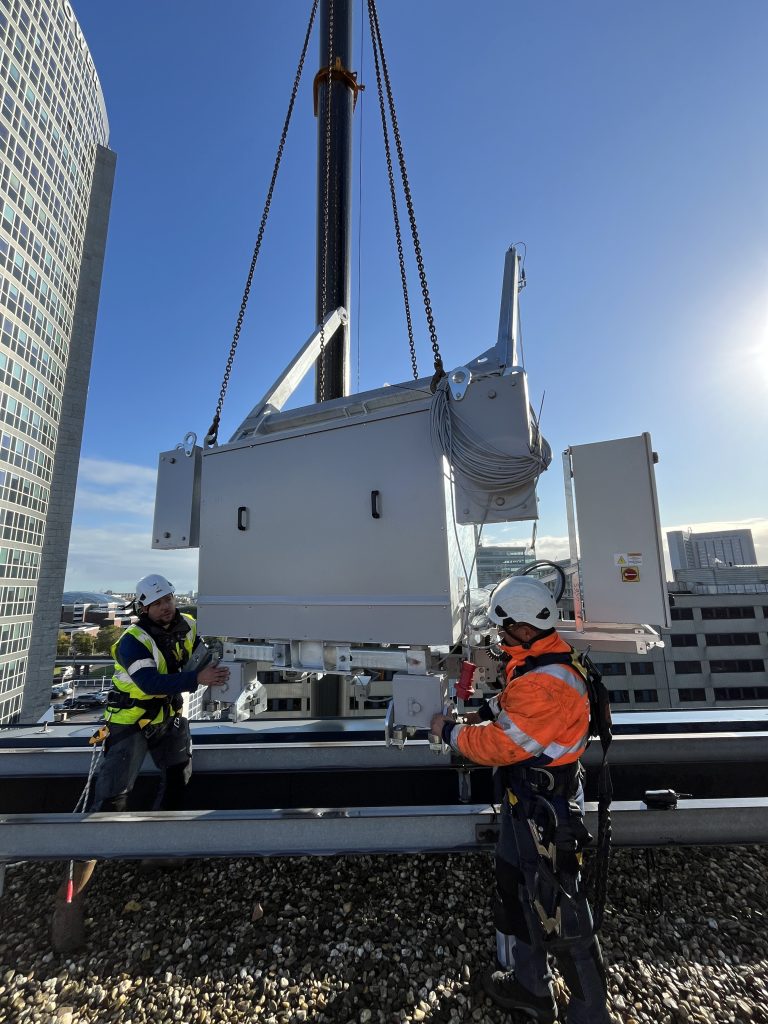
A facade access system is a long-term asset. Keeping it operational, safe, and compliant requires more than an annual inspection. Facade Access Solutions provides full lifecycle support so your equipment performs reliably for decades.
Equipment downtime on a hospital is not just inconvenient. It delays critical facade maintenance and creates safety gaps. Our service maintenance programs range from scheduled preventive maintenance to comprehensive service contracts with guaranteed response times. All work is carried out by factory-trained technicians who understand the equipment from the inside out.
Healthcare facilities undergo regular accreditation surveys where building systems are scrutinized. A lapsed facade access inspection can trigger compliance findings that put your accreditation at risk. Our inspection and compliance programs deliver documented, audit-ready records that satisfy OSHA, BS EN 1808, and local code requirements. We identify deficiencies before they become violations.
Replacing an entire access system is not always the most practical path. Refurbishment restores aging BMUs, davit systems, and platforms to current performance standards at a fraction of the replacement cost. This is especially valuable for healthcare facilities managing tight capital budgets while maintaining multiple buildings.
Generic replacement parts introduce risk into safety-critical equipment. OEM spare parts from Facade Access Solutions are manufactured to original specifications, so your equipment retains its rated load capacity and safety margins. Genuine parts also prevent voiding manufacturer warranties and keep your compliance documentation intact.
Large healthcare systems that manage facade access equipment across multiple campuses need centralized visibility into asset condition. Our asset management programs include remote monitoring through the MyBMU platform, lifecycle tracking, and predictive maintenance scheduling. You get real-time data on equipment usage, upcoming service intervals, and potential issues before they cause unplanned downtime.
Properly trained operators and maintenance staff are your first line of defense against workplace incidents. Our training programs cover safe equipment operation, routine inspection procedures, and emergency protocols. Training is delivered on-site and can be customized to your facility’s specific equipment and operational requirements.
Facade access systems on healthcare buildings must comply with national and international standards that vary by jurisdiction. Below are the key regulatory frameworks that apply globally.
We work with architects, engineers, and facility owners worldwide to deliver access systems built for healthcare environments.
It depends on the building’s height, facade complexity, and roof conditions. Multi-story hospitals with complex geometries typically require a custom building maintenance unit. Low- to mid-rise clinics may be well served by davit systems or powered platforms, while some still warrant a BMU. A site-specific assessment determines the right fit. Monorail systems work well for interior atriums and glazed lobbies. The right answer starts with a site-specific engineering assessment.
We design every system with hospital operations in mind. That means selecting low-noise equipment and systems engineered to maintain reliable access across the building envelope without compromising safe operation on an occupied hospital. For retrofit projects, we sequence work in phases to keep building operations moving as safely and efficiently as possible throughout the installation process.
Facade access equipment must comply with the safety standards applicable in your jurisdiction. In the US, OSHA regulations and ANSI/ASME A120.1 govern powered platforms for building maintenance, while the ANSI/ASSP Z359 family covers fall protection systems. In Europe and many international markets, BS EN 1808 covers the design and testing of suspended access equipment. UK projects also reference BS 6037-1 and LOLER 1998, with anchor devices governed by EN 795 and BS 7883. Australia follows AS 1418.13 and AS 2550.13 for BMU design and operation. Local building codes may add further requirements. Healthcare facilities also face scrutiny from accreditation bodies like the Joint Commission, which audits building maintenance systems as part of facility compliance reviews. Visit our codes and regulations page for a comprehensive overview.
In some cases, yes. Our engineering team conducts a structural assessment of the existing roof and building frame to determine load capacity. If the structure supports the required loads, a BMU can often be installed with minimal modifications. When structural upgrades are needed, we design reinforcement solutions that can be implemented without taking the building offline. Every retrofit project is planned to reduce disruption to hospital operations.
Facade access is one of the most expensive items to retrofit after construction. If roof loads, anchor points, and track routing are not accounted for in the structural design, the building may need costly modifications later. A facade access consultant identifies these requirements during schematic design and coordinates with your architects and structural engineers to integrate the access system into the building from the start. This saves both time and money over the life of the project.