Global Site - English
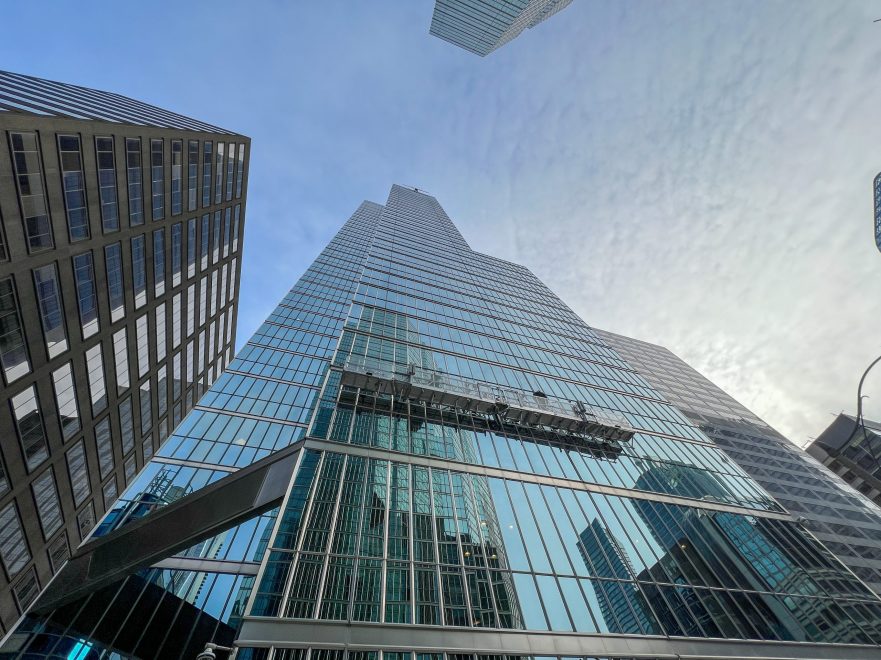
Data centers present distinct facade access challenges. Rooftops are typically dense with HVAC systems, generators, and cooling infrastructure. This leaves a limited staging area for maintenance equipment. Security requirements restrict unauthorized personnel and temporary scaffolding. At the same time, metal cladding, louvered ventilation panels, and rainscreen systems all require periodic inspection and cleaning to maintain structural performance.
Our facade access equipment is engineered around these constraints. Every system is designed to international safety standards and can be integrated into the building structure from the earliest design stages. With 16,000+ installed projects and over 120 years of combined experience across our brands, our global engineering team can solve facade access challenges at any scale.
Our product range covers every exterior access requirement for data center buildings. Each system is selected based on your facility’s height, roof configuration, cladding type, and operational constraints.
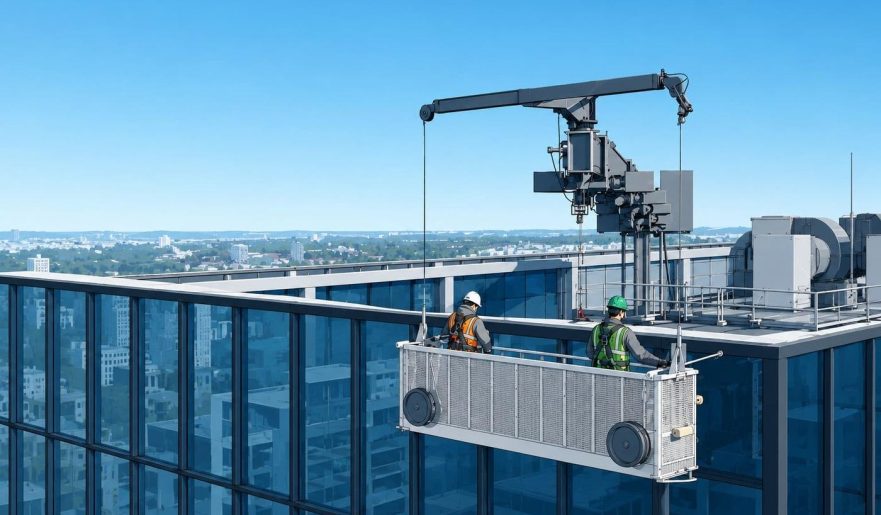
Congested data center rooftops demand compact, track-mounted BMU configurations that route around mechanical equipment. Our building maintenance units provide full facade coverage without scaffolding or temporary rigging. The MyBMU remote monitoring platform tracks equipment usage, flags service intervals, and supports predictive maintenance to reduce unplanned system downtime.
When a full BMU is not justified by the building’s size, davit systems provide cost-effective access with a small roof footprint. Portable or fixed-base options support suspended platforms for cladding inspections, panel replacement, and facade cleaning. Masts retract out of sight when not in use, preserving the building’s exterior profile.
Concealed monorail tracks run along long, repetitive data center facades and provide a permanent travel path for suspended platforms. Turntables handle corners and direction changes with minimal space. The system is low-profile, blends with the building exterior, and suits facilities where visual impact and security screening are priorities.
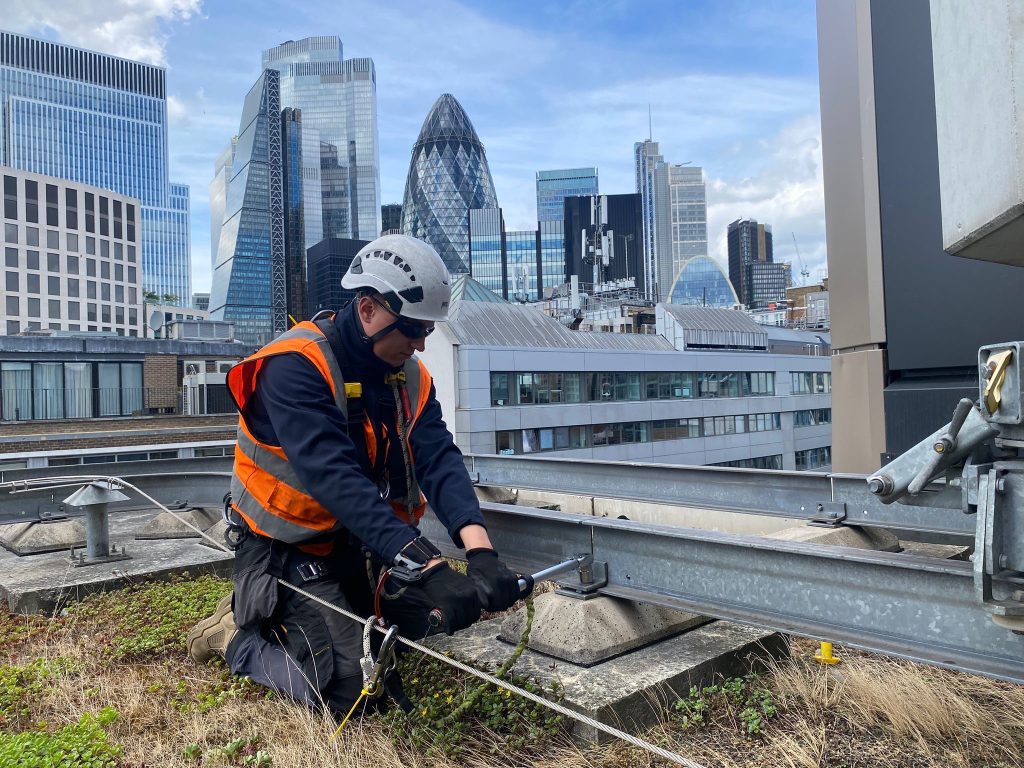
Rooftop technicians servicing HVAC units, generators, and cooling infrastructure need certified fall protection. Our tieback anchors and horizontal lifeline systems provide permanent, code-compliant anchorage for personal fall arrest. Designs meet OSHA, ANSI, EN 795, and regional working-at-height requirements.
Modular powered platforms are assembled to match the width of large data center facade sections. They handle heavier loads for cladding repair and panel replacement work. Integrated safety systems include emergency descent, tilt detection, and slack cable detection for full operator protection at height.
Whether you are building a new facility or upgrading an existing one, we deliver facade access solutions matched to your project stage and site requirements.
Planning facade access during design avoids costly structural retrofits after construction. Our team coordinates with architects and engineers to integrate track routing, structural loads, and equipment placement before ground is broken. Early involvement results in a more efficient facade access system with lower total lifecycle cost.
Our engineers use 3D modeling and BIM tools to visualize how facade access equipment interacts with rooftop mechanical systems and the building envelope. This collaborative process identifies clashes early and streamlines coordination across project stakeholders. Explore our integrated design services.
Existing data centers that lack permanent facade access or operate aging equipment can be upgraded with modern systems. Retrofit projects are scoped to minimize operational disruption while delivering full facade coverage and compliance with current safety standards.
Data center campuses with cooling towers, substations, or auxiliary structures may require specialized access beyond that provided by standard BMUs. Our infrastructure access solutions address unique structural and operational requirements across the full site footprint.
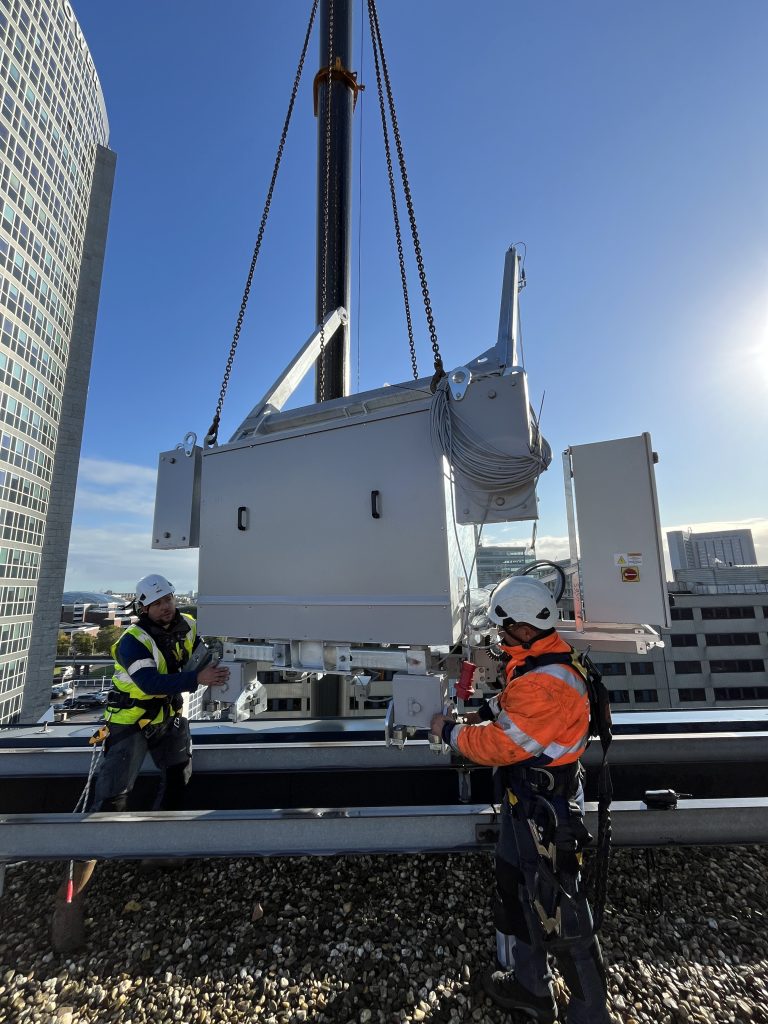
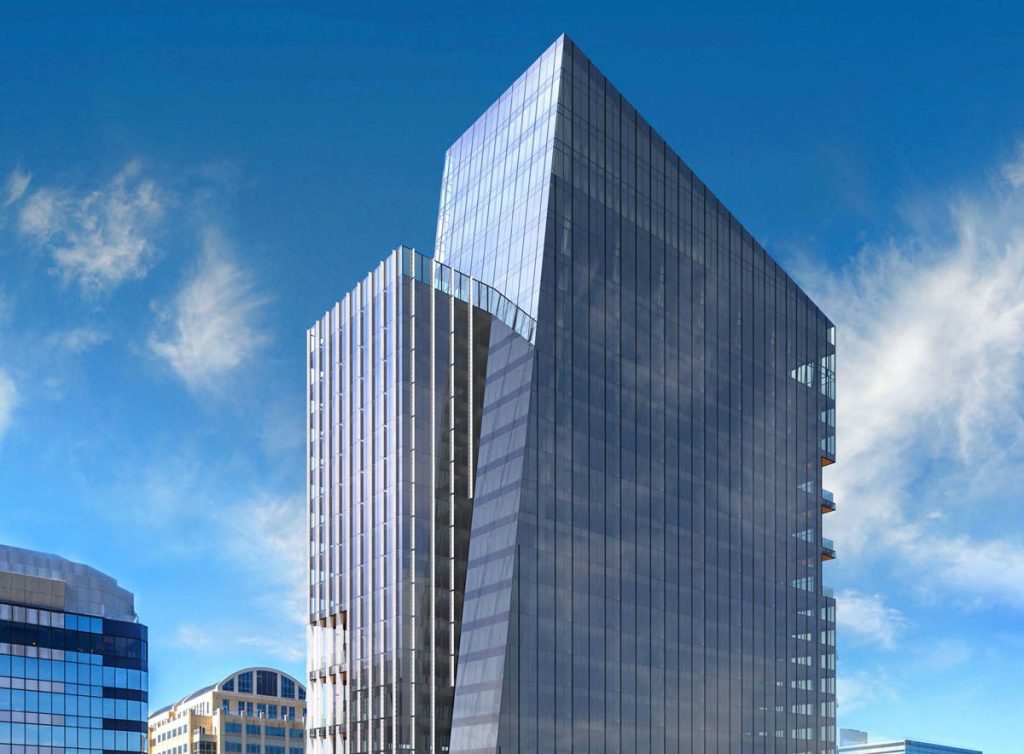
Keeping facade access equipment in safe, operational condition requires ongoing service from qualified specialists.
Unplanned equipment failures delay facade maintenance and create safety risks. Preventive service contracts and emergency repair support keep your facade access system operational year-round. Plans range from scheduled visits to comprehensive agreements covering parts and labor at a fixed annual cost.
Periodic inspections identify wear, corrosion, and component fatigue before they become safety hazards. Factory-trained technicians conduct assessments aligned with BS EN 1808, BS 6037, OSHA, and regional codes. Detailed reports document system condition and flag items requiring action. See our inspection and compliance services.
Full system replacement is not always necessary. Refurbishment can restore aging BMUs and davit systems to operational condition at a fraction of replacement cost. Upgrades may include new hoists, electrical systems, control panels, and safety devices.
Genuine Tractel, Manntech, and CoxGomyl spare parts maintain system performance and protect warranty coverage. Non-OEM components risk premature failure and may void compliance certifications. Parts ship through a global distribution network for fast delivery.
Lifecycle planning helps data center operators control maintenance budgets and avoid unexpected capital expenditure. The MyBMU remote monitoring platform tracks usage data, flags service intervals, and supports data-driven decisions. Learn about our asset management programs.
Operators and technicians require certified training before using BMUs, suspended platforms, or fall protection systems. Our programs cover safe operation procedures, emergency protocols, and routine maintenance checks to meet regulatory requirements.
Non-compliance can lead to failed inspections, project delays, and increased liability for building owners. The specific codes that apply depend on your facility’s location and the type of access equipment installed.
Talk to our facade access consultants about the right system for your data center. Get a site-specific proposal today.
It depends on building height, roof configuration, and cladding type. Low-to-mid-rise facilities often use davit systems or powered platforms. Larger or multi-story data centers benefit from track-mounted building maintenance units that provide full-perimeter coverage. A facade access consultant can assess your site and recommend the right configuration for your operational needs.
Compact and track-based BMU designs are configured for buildings with congested rooftops. The machine footprint is minimized, and track routing is planned around HVAC equipment, generators, and other infrastructure. BIM modeling during the design phase helps identify the most efficient layout before installation begins.
Requirements vary by region. Key standards include BS EN 1808 for suspended access equipment, BS 6037 for permanently installed systems, OSHA 29 CFR 1910.66 in the U.S., ANSI/ASME A120.1 for suspended platforms and related equipment, and AS 1418.13 in Australia.
Yes. Many existing data centers were built without permanent exterior access or rely on outdated equipment. Our retrofit services team evaluates the existing structure and designs a system that provides full facade coverage with minimal disruption to ongoing operations.
Contact our team through the form on this page or reach out to your regional Facade Access Solutions office. A facade access consultant will review your project requirements, conduct a site assessment, and deliver a detailed proposal for your facility.